
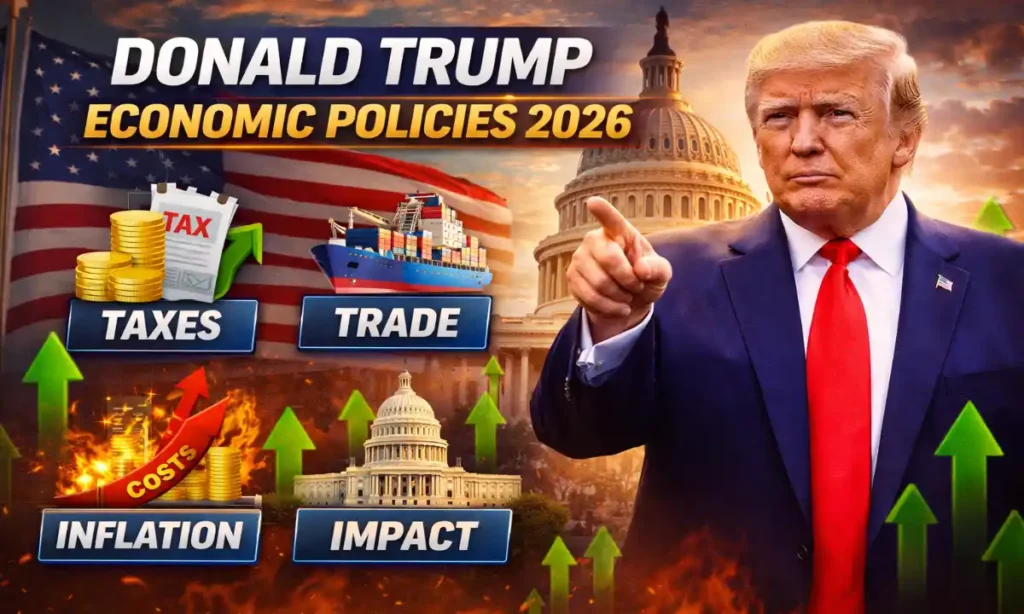

The economic policies of Donald Trump continue to be one of the most debated topics in American politics. Known for his “America First” economic philosophy, Trump’s policies generally focus on lower taxes, strong domestic industries, reduced regulations, and aggressive trade negotiations.
As discussions around the 2026 economic outlook continue, Trump’s policy ideas are again being analyzed for their potential impact on inflation, job creation, healthcare costs, taxation, and global trade. Supporters believe his policies can strengthen the US economy and boost domestic businesses, while critics argue they could increase government debt and trade tensions.
This article explains Trump’s major economic policies, their potential benefits, criticisms, and what they could mean for the future of the US economy.
Overview of Donald Trump’s Economic Philosophy
Donald Trump’s economic approach is often described as pro-business and nationalist economic policy. His strategy focuses on encouraging American companies to grow domestically while reducing dependence on foreign manufacturing.
His main economic priorities typically include:
• Lower corporate taxes
• Reducing government regulations
• Increasing domestic manufacturing
• Energy independence
• Stronger border economic control
• Trade tariffs to protect US industries
Trump’s economic ideology is often compared to supply-side economics, which suggests that lowering taxes and regulations can stimulate business growth and increase employment.
Trump Tax Policy Plans
Tax reform has always been a central pillar of Trump’s economic agenda. During his presidency, the Tax Cuts and Jobs Act significantly reduced corporate tax rates from 35% to 21%.
For future economic planning, Trump has continued to support:
Key Tax Policy Proposals
• Extending previous tax cuts
• Further reducing business taxes
• Simplifying the tax code
• Incentives for companies manufacturing in the US
• Reducing capital gains taxes
The goal behind these policies is to encourage investment and increase job creation.
Potential Benefits of Lower Taxes
Supporters argue tax cuts can:
• Increase business investments
• Boost stock markets
• Increase hiring
• Improve small business growth
• Increase consumer spending
Criticism of Tax Cuts
Critics argue:
• Tax cuts may increase federal deficit
• Wealth benefits may go mainly to corporations
• Government revenue may decrease
The debate around tax policy remains one of the most controversial aspects of Trump’s economic vision.
Trump Trade Policy and Tariffs
Trump’s trade policy is strongly centered on protecting American industries from foreign competition.
His strategy often includes tariffs on imports to encourage domestic production.
Major Trade Policy Ideas
• Tariffs on Chinese imports
• Renegotiation of trade agreements
• Encouraging US manufacturing
• Reducing trade deficits
• Economic pressure on foreign competitors
Trump believes tariffs help American workers by discouraging outsourcing.
Trade Policy Impact Table
| Policy Area | Trump Strategy | Intended Outcome |
| Imports | Tariffs | Protect US industries |
| Manufacturing | Domestic incentives | Job growth |
| Trade Deals | Renegotiation | Fair agreements |
| Supply Chains | Domestic focus | Economic security |
Trump’s Approach to Inflation
Inflation has been a major concern for American voters. Trump’s economic proposals often focus on reducing inflation through energy production and domestic economic expansion.
Trump’s Inflation Control Strategies
• Increase oil and gas production
• Reduce regulations on energy companies
• Strengthen domestic supply chains
• Encourage manufacturing growth
Supporters believe increasing domestic production could reduce reliance on expensive imports.
However, some economists argue tariffs could increase consumer prices in the short term.
Job Creation Strategy
Job creation is another key focus of Trump’s economic plan. His policies often emphasize business expansion and infrastructure investment.
Key Job Creation Ideas
• Corporate tax incentives
• Manufacturing incentives
• Infrastructure spending
• Energy sector expansion
• Small business support
Trump’s economic messaging frequently emphasizes bringing manufacturing jobs back to the United States.
Energy Policy and Economic Impact
Energy independence is one of Trump’s most important economic goals.
His approach generally supports:
• Increased oil drilling
• Natural gas production
• Reduced environmental regulations
• Pipeline expansion
Supporters argue these policies can:
• Reduce fuel prices
• Create jobs
• Strengthen energy security
Critics argue environmental concerns must also be considered.
Healthcare Economic Policies
Healthcare costs remain one of the biggest financial challenges for Americans. Trump’s economic proposals have included reforms aimed at reducing insurance costs.
Healthcare Economic Ideas
• Increasing insurance competition
• Price transparency rules
• Reducing prescription drug prices
• Expanding healthcare choice
The goal is to reduce healthcare spending while improving access.
Healthcare policy often intersects with economic policy because medical costs directly affect household finances.
Small Business Economic Policies
Trump frequently emphasizes support for small businesses, which are considered the backbone of the American economy.
Small Business Policy Focus
• Lower business taxes
• Simplified regulations
• Easier loan access
• Domestic business incentives
Small businesses benefit from reduced compliance costs and tax relief under pro-business policies.
Economic Growth Strategy
Trump’s economic approach is largely based on stimulating economic growth through private sector expansion rather than government programs.
Growth Strategy Focus Areas
• Investment incentives
• Capital market expansion
• Deregulation
• Manufacturing development
• Technology investment
Economic growth is often measured by:
GDP growth
Unemployment rates
Stock market performance
Consumer spending
Trump often highlights stock market performance as a key economic indicator.
Criticism of Trump Economic Policies
Like any major economic strategy, Trump’s policies have received criticism.
Major Criticisms Include:
• Increasing national debt
• Risk of trade wars
• Tariff related price increases
• Reduced environmental protections
• Wealth inequality concerns
Some economists believe long term fiscal balance must also be considered alongside growth.
Supporters’ Arguments
Trump’s supporters believe his economic approach strengthens the country’s competitiveness.
Key Supporter Arguments
• Encourages business expansion
• Promotes American manufacturing
• Strengthens national economy
• Encourages entrepreneurship
• Improves employment opportunities
The debate largely depends on whether economic growth or fiscal balance should be prioritized.
Economic Outlook for 2026
The potential impact of Trump’s economic ideas depends on multiple factors:
Global economic trends
Federal Reserve policy
Energy prices
International trade stability
Technological innovation
Economic results depend not only on policy but also global conditions.
Key Economic Policy Comparison
| Economic Area | Supporters View | Critics View |
| Tax Cuts | Boost growth | Increase deficit |
| Tariffs | Protect jobs | Raise prices |
| Deregulation | Help business | Risk oversight |
| Energy Policy | Lower costs | Environmental concerns |
Future Economic Risks and Opportunities
The future of the US economy depends on balancing growth and stability.
Opportunities:
• Manufacturing expansion
• Technology growth
• Energy development
• Investment increases
Risks:
• Trade tensions
• Inflation pressures
• Global market uncertainty
• Fiscal deficits
Economic policy success depends on managing both risks and opportunities.
Conclusion
Donald Trump’s economic policies continue to shape political and financial debates in the United States. His focus on tax cuts, trade reform, domestic manufacturing, and energy independence represents a pro-growth economic strategy aimed at strengthening American businesses.
Supporters believe these policies can increase jobs and investment, while critics warn about fiscal risks and trade challenges.
As the US economy continues to evolve, the effectiveness of these policies will likely remain a central topic in political and economic discussions.
FAQs
What are Donald Trump’s main economic policies?
Trump’s policies focus on tax cuts, trade protection, deregulation, and domestic manufacturing growth.
Do Trump economic policies reduce taxes?
Yes, his economic approach generally supports lower corporate and individual taxes.
What is Trump’s trade strategy?
His strategy focuses on tariffs and renegotiating trade agreements to support US industries.
Can Trump policies reduce inflation?
Supporters believe domestic production and energy expansion may help reduce inflation.
Do Trump policies help businesses?
Supporters argue lower taxes and fewer regulations help business growth.